
1 / 6
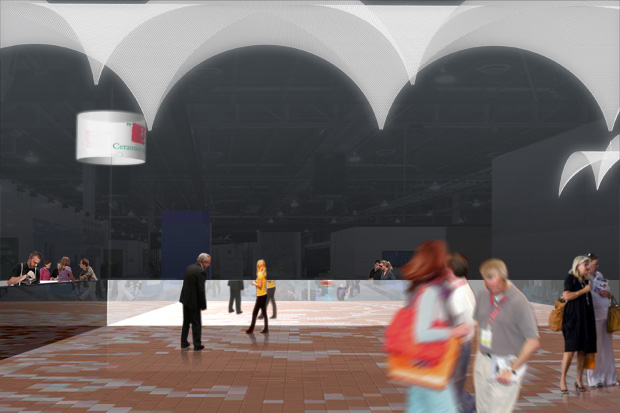



The reproduction of a piazza, the preeminent Italian public space.
The contemporary translation of the arcade.
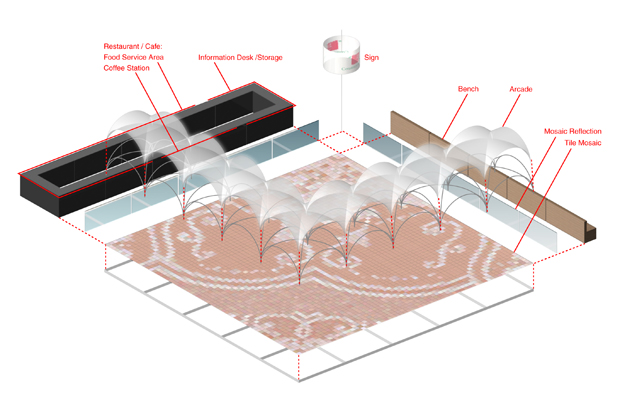
Diagram.
Tile assembly and pattern variation.
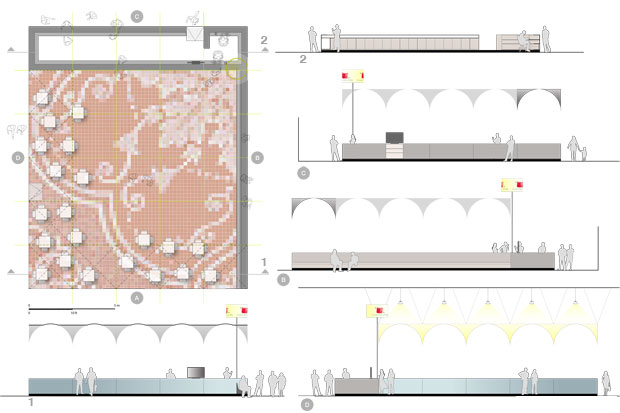
Plan, elevations and sections.
Ceramica Italiana. square tiles I tiles square
competition. 2011
Design: k&k architects + Maria Stefanidis
The reproduction of a piazza, the preeminent Italian public space, was the proposal for the “Ceramica Italiana” presence in the heart of the 40,000sf Italian Pavilion.
The reproduction is achieved both conceptually and literally.
Conceptually through the contemporary translation of the arcade -an essential element of the generic Italian piazza- and literally, through the use of two mirrors that quadruplicate a tile-made pattern, which is laid out throughout the exhibition floor.
A light structure of fabric stretched around a folding metal frame flies 12f over the floor. It’s a series of cross vaults, as a trace reminiscent of the archetypical arcade. This glowing translucent lace assumes the role of both a marquee for the pavilion and a shed for the flexible arrangement of the movable tables, as needed.
The open floor surface is laid out with a mosaic of tiles which forms one quarter of a particular pattern-theme. An exemplatory case for tile laying and patterning through repetition is demonstrated while highlighted through the mirroring effect. The resulted mosaic’s reflection onto the mirrors
completes the selected pattern-theme and
multiplies visually the actual floor’s surface. The pavilion’s concept facilitates the variety of themes allowing for seasonal adaptations of colors, hues and tile lines for future shows.
The facilities of the pop up restaurant /café and the information desk are placed along one side of the exhibition area, leaving most of the available area unobstructed for the floor to display its spectacle. A linear bar loop is arranged in sections for food service and the coffee station and allows the formation of two or more lines, both inside and outside the pavilion. A long bench is placed along the other side, facing the hall’s secondary corridor, welcoming exhibitors and visitors to rest or offering a seating option to those seeking information at the adjacent information desk.
Due to its axial layout, the construction is modular and adaptable in different plan sizes while maintaining its proportions and all its integral or conceptual elements. At the same time, its arrangement allows the pavilion to stand completely open on two main sides, offers easy access to the visitors and ensures best visibility for the Ceramics of Italy exhibit from the ‘Tramway’.


